Best Sunscreen for Face: How to Choose SPF for Every Skin Type
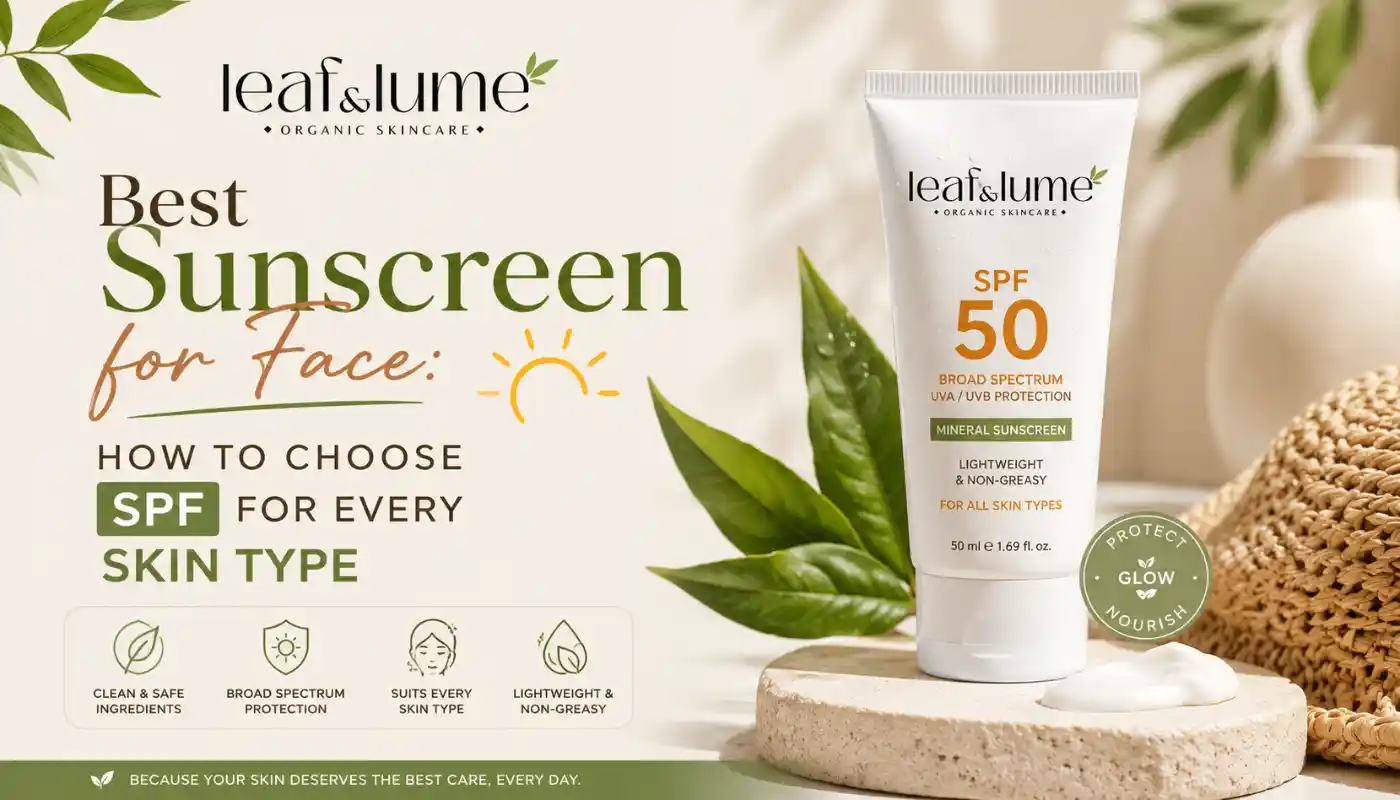
If you want healthy, glowing skin, sunscreen is one skincare product you should never skip.
Many people think sunscreen is only needed on sunny days or at the beach. But the truth is that your skin is exposed to harmful UV rays every day—even when it's cloudy or you're indoors near windows.
Using the right sunscreen can help prevent sunburn, dark spots, premature aging, and long-term skin damage.
In this guide, you'll learn how to choose the best sunscreen for your face, what SPF means, and which sunscreen works best for your skin type.
Quick Answer
The best sunscreen for your face is one that:
Has SPF 30 or higher
Offers broad-spectrum protection against UVA and UVB rays
Matches your skin type
Feels comfortable enough to wear every day
Daily sunscreen use helps protect your skin from sun damage, pigmentation, and early signs of aging.
What Is Sunscreen?
Sunscreen is a skincare product that protects your skin from the sun's harmful ultraviolet (UV) rays.
These UV rays can cause:
Sunburn
Dark spots
Uneven skin tone
Wrinkles
Premature aging
Increased risk of skin cancer
Applying sunscreen every day helps reduce these risks.
What Does SPF Mean?
SPF stands for Sun Protection Factor.
It tells you how well a sunscreen protects your skin from UVB rays, which are mainly responsible for sunburn.
Here is a simple guide:
SPF LevelProtectionSPF 15Suitable for limited daily exposureSPF 30Blocks about 97% of UVB raysSPF 50Blocks about 98% of UVB raysSPF 50+Offers slightly higher protection, but no sunscreen blocks 100% of UV rays
For most people, SPF 30 or SPF 50 is a good everyday choice.
What Is Broad-Spectrum Sunscreen?
Broad-spectrum sunscreen protects against both UVA and UVB rays.
UVA Rays
These rays can:
Cause wrinkles
Lead to premature aging
Contribute to pigmentation
UVB Rays
These rays can:
Cause sunburn
Damage the outer layer of your skin
Choose a sunscreen labeled Broad Spectrum so you get protection from both types of UV rays.
How to Choose the Best Sunscreen for Your Skin Type
Not every sunscreen works the same for everyone.
Choosing the right one depends on your skin type.
Best Sunscreen for Oily Skin
If your skin becomes shiny during the day, choose a sunscreen that is:
Oil-free
Lightweight
Matte finish
Non-comedogenic
Gel or fluid formula
These products help control shine without clogging pores.
Best Sunscreen for Dry Skin
Dry skin needs extra hydration.
Look for sunscreens that contain ingredients like:
Hyaluronic Acid
Glycerin
Ceramides
Squalane
Cream-based formulas usually work well for dry skin.
Best Sunscreen for Sensitive Skin
Sensitive skin needs gentle products.
Choose a sunscreen that is:
Fragrance-free
Alcohol-free
Designed for sensitive skin
If a sunscreen irritates your skin, stop using it and consult a dermatologist.
Best Sunscreen for Acne-Prone Skin
If you often get pimples, choose products labeled:
Non-comedogenic
Oil-free
Lightweight
Fast absorbing
These formulas are less likely to clog pores.
Best Sunscreen for Combination Skin
Combination skin has both oily and dry areas.
A lightweight lotion or gel-cream sunscreen usually works well.
It hydrates dry areas without making oily areas greasy.
Mineral vs Chemical Sunscreen
There are two main types of sunscreen.
Mineral Sunscreen
Mineral sunscreen sits on the surface of the skin and reflects UV rays.
Common ingredients include:
Zinc Oxide
Titanium Dioxide
Many people with sensitive skin prefer mineral sunscreens.
Chemical Sunscreen
Chemical sunscreen absorbs UV rays before they can damage your skin.
These formulas are often lightweight and leave little or no white cast.
Both mineral and chemical sunscreens can be effective when used correctly.
How Much Sunscreen Should You Apply?
Many people don't use enough sunscreen.
For your face and neck, use about two finger lengths of sunscreen.
Apply it evenly over all exposed skin.
When Should You Apply Sunscreen?
Apply sunscreen:
15–20 minutes before going outside
As the last step of your morning skincare routine
Before makeup
Daily use provides the best protection.
Do You Need to Reapply Sunscreen?
Yes.
Reapply sunscreen every two hours if you're outdoors.
You should also reapply after:
Sweating
Swimming
Towel drying
Regular reapplication helps maintain protection.
Common Sunscreen Mistakes
Avoid these common mistakes:
Applying too little sunscreen
Skipping sunscreen on cloudy days
Forgetting the ears and neck
Not reapplying during long outdoor activities
Using expired sunscreen
Small mistakes can reduce how well sunscreen protects your skin.
Morning Skincare Routine with Sunscreen
A simple morning routine looks like this:
Cleanser
Serum (Optional)
Moisturizer
Sunscreen
Makeup (If you wear it)
Always apply sunscreen after moisturizer.
Benefits of Wearing Sunscreen Every Day
Daily sunscreen use can help:
Prevent sunburn
Reduce dark spots
Slow visible signs of aging
Protect collagen
Support an even skin tone
Improve long-term skin health
Consistency matters more than using sunscreen only on sunny days.
Final Thoughts
Choosing the best sunscreen for your face doesn't have to be difficult.
Start by selecting a broad-spectrum sunscreen with SPF 30 or higher that matches your skin type.
Whether you have oily, dry, sensitive, or combination skin, there is a sunscreen designed for your needs.
The most important step is using it consistently and applying enough product every morning.
Healthy skin starts with daily sun protection.